
The British Flower and Vibrational Essences Association (2010)
Measure Yourself Medical Outcome Profile (MYMOP)
MYMOP stands for Measure Yourself Medical Outcome Profile and was developed by Dr Charlotte Paterson as a way of evaluating the effectiveness of treatment in both orthodox and complementary medical settings. It is very simple to use and has become a popular measurement tool for many therapists, nurses and researchers.
This manual has been developed to accompany the instructional film What is MYMOP?, made by Get Well UK as a way of helping BFVEA members and other practitioners to introduce and integrate MYMOP into their practices.
BFVEA is indebted to Dr Charlotte Paterson, the developer of MYMOP; to The Twelve Healers Trust, who very generously awarded a grant to set up and maintain this BFVEA initiative; to David Corr and to Sue Lilly for their BAFEP Research Project pilot study and to Carol Rudd for recommending the use of MYMOP to BFVEA practitioners. We also wish to express our sincere thanks to Boo Armstrong and Get Well UK for allowing us to use their film What is MYMOP?; to David Corr and Jan Stewart for writing this handbook; to Anna Zee for its edit, design and production; to Charlotte Barrow for copy editing and proofreading; to Andrew Tresidder for proofreading; and to Jan Stewart for steering the project.
Flower Remedies for Emotional Relief & Education (2011)
Implementing a Flower Essence Therapy Service at Les Amis de Kirikou
Rixensart, Belgium
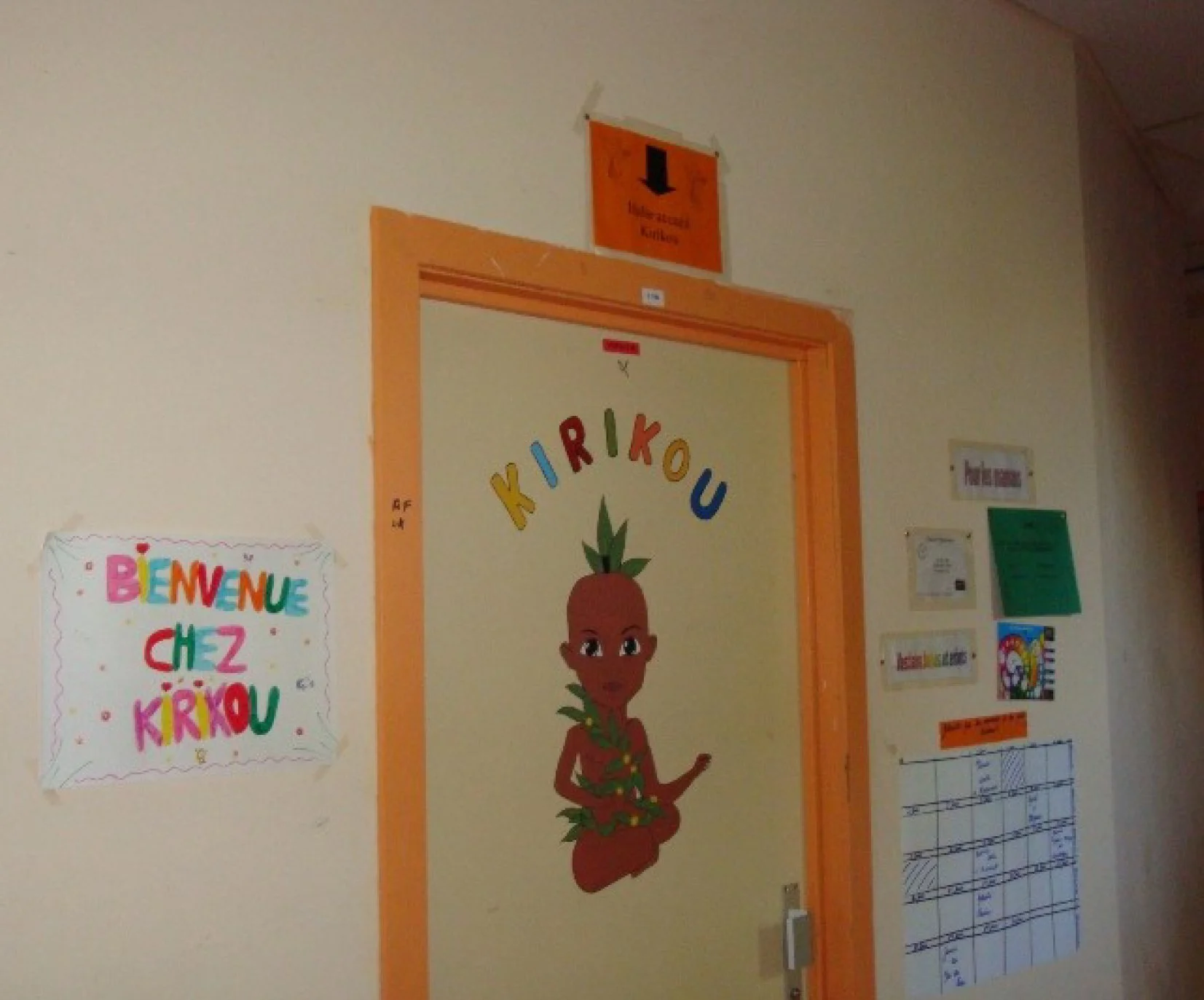
We offered financial and material support to implement a Flower Essence Therapy service at Les amis de Kirikou (Friends of Kirikou), a Belgium social institution aiming to attend young refugee girls, mothers to be , and Mothers with babies. Its main goal is to train the staff to reproduce the project held at Núcleo Mãe Maria, in 2006, in Brazil, teaching the Bach Remedies to children. The trainer developed a special flower essence combination to address the main issues of the girls and babies assisted and instructs the staff on how to use and to prepare the flower remedies properly.
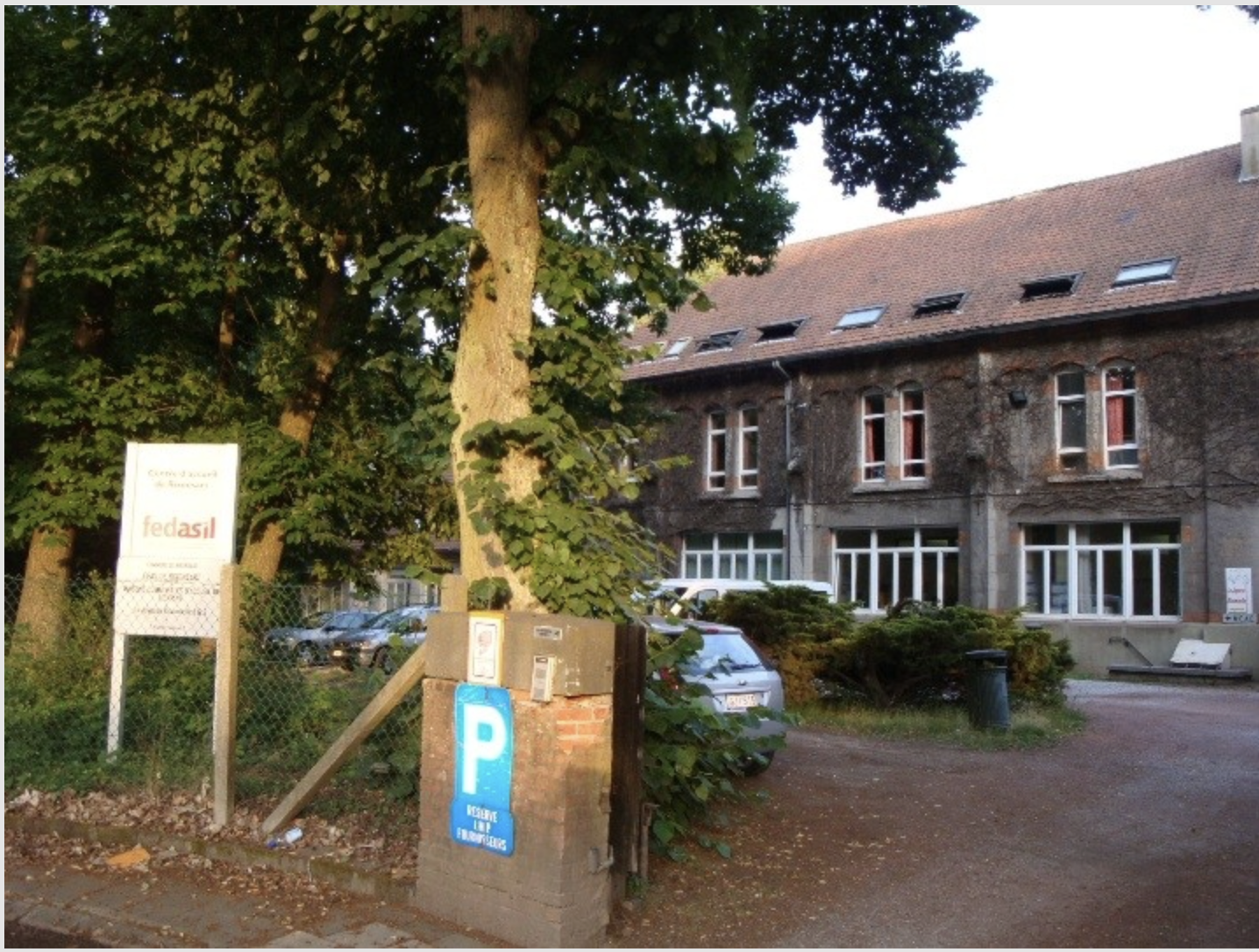
The training started in July 18th 2011 at Les amis de Kirikou installations at the Fedasil asylum seeker’s shelter building in Rixensart, Belgium.
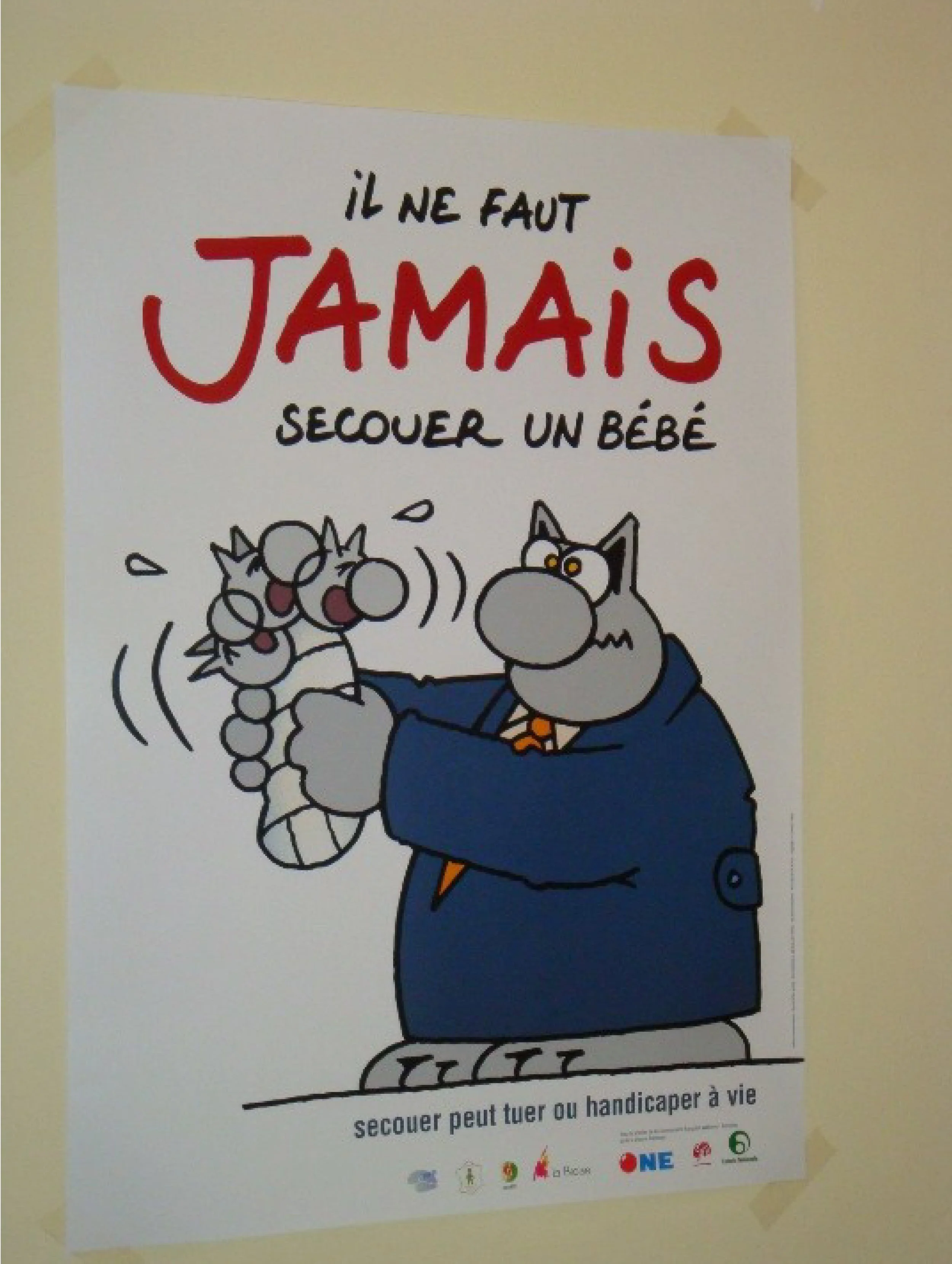
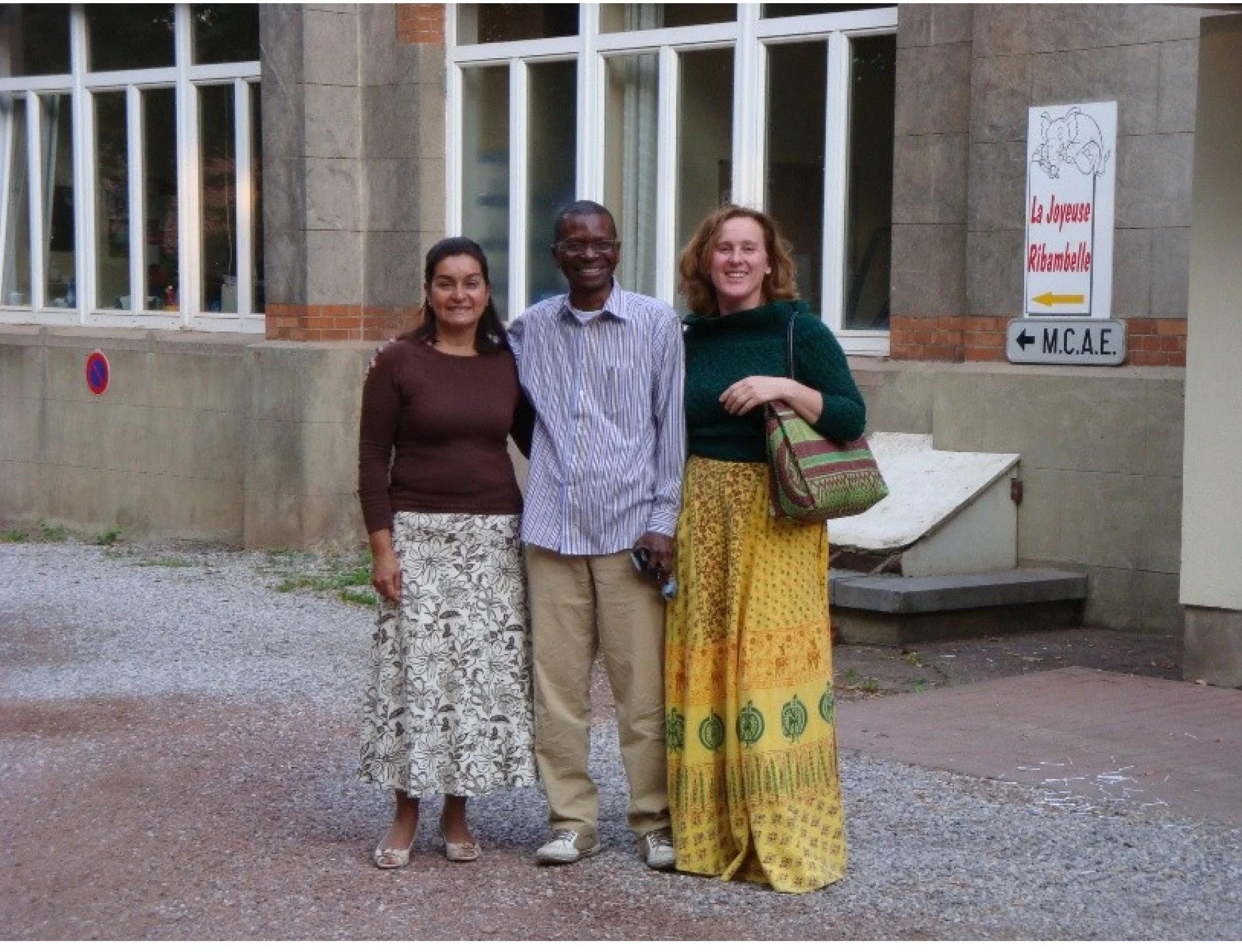
Images above: The Centre in Rixensart and Hippolyte Kisondé, Géraldine Langlois & Rosana Souto.
Historical Background
The idea was to honor Dr. Bach, on the event of his 120th birthday, through an initiative of teaching about the Bach Flower Remedies to children would lead to another dimension of his work. It has revealed itself as a path towards the future of Flower Essence Therapy and the achievement of Dr. Bach’s ideals as regards, as the medicine of the future. The synergic results of the combination of the Bach plants’ observation, to the use of the remedies and art-education have led the mentor the project, Rosana Souto, to share it at the XVIII International Flower Essence Therapists Congress in Cuba, in November 2010, and later through an article published by the British Flower & Vibrational Essences.
The latter was released by the occasion of the Word Rainbow Vibrational Essence Conference, in March, 2011, and caused great impact on Géraldine Langlois a renowned humanitarian Belgium photographer. Since then, she has been in contact with Rosana Souto aiming to find ways to reproduce the project somewhere. Last May, attending her invitation to visit Brussels, Rosana was introduced to one of her friends, Hippolyte Kisondé, who directs the minors sector of the Fedasil refugee center, in Rixensart, and also coordinates the association, Les amis de Kirikou. Hippolyte Kisondé was strongly impressed by the results of Rosana’s work at Nucleo Mãe Maria and decided to suggest the president of this association, Stéphane Crusnière, the inclusion of the flower remedies at the association.
In June 2011, Rosana visited the home of Les Amis de Kirikou at the Fedasil center in Rixensart. Some days later, she has sent a proposal to introduce the flower essence service and to reproduce the children’s project with the young girls in a way to fit the coordinator’s expectations not to overcharging the staff. Last week, Géraldine Langlois received an e-mail from the president, Stéphane Crusnière, approving the project. Later, the coordinator, Hippolyte Kisondé would send a letter to the Twelve Healers Trust.
An outstanding opportunity for acceptance and recognition of the work of Dr. Bach in Europe at a time when the natural remedies face major challenges in the UK and Europe, this initiative seems to be an outstanding opportunity for the acceptance and recognition of Dr. Bach’ work and the flower remedies by the European Community. Although the association, Les amis de Kirikou isn’t a governmental institution, its president, Stéphane Crusnière, is also the Chief of Cabinet of the Belgium Prime Minister. This initiative will serve as a pilot to evaluate the possibility of its expansion for the largest refugee centers of Europe. Besides bearing the wounds of the many reasons they have escaped from their own countries, refugees face other challenges to be included in the countries they request asylum. This way, this initiative may be already considered as a global humanitarian project.
The association Les amis de Kirikou (Friends of Kirikou )
The friends of Kirikou (Les amis de Kirikou ) is a small association created in 2008, to provide assistance to the young refugee girls mothers or mothers to be (unaccompanied minors – Mena ) and their babies. Until that year, they were sent to the largest refugee centers of Fédasil sharing the same shelter of young refugee men and soldiers. It is not a governmental institution. It’s a citizen one, however its board of directors is made up of people who are active in the government. The institution has received a private area inside the building of the Fedasil refugee center in Rixensart to be able to provide the proper assistance to the girls. It counts on a team of professionals including nurses, teachers and psychologists to assist the girls in their needs and to enable them to keep on with their education after giving birth. The association has also a partnership with a local hospital, doctors and midwifes to assist the girls and their babies. Please, see the attachments for more information.
The Menas and their babies
At present, the center is the home of 26 Menas and 9 babies. The girls stay at center as long as the asylum process lasts and/or they finish their education.
Implementing a Flower Essence Therapy Service at Les Amis de Kirikou – Rixensart
Main goals of the project:
To offer a complementary tool to relief emotional negative states, including traumas of all nature, present on girls and/or young mothers assisted by the association, as well as, on their babies by the use of flower remedies. To provide the girls tools for self-development and emotional self-healing by introducing them to language of nature through activities related to the Bach Flower Remedies research.
BEES FOR DEVELOPEMENT (1993)
Celebrating over 30 years !
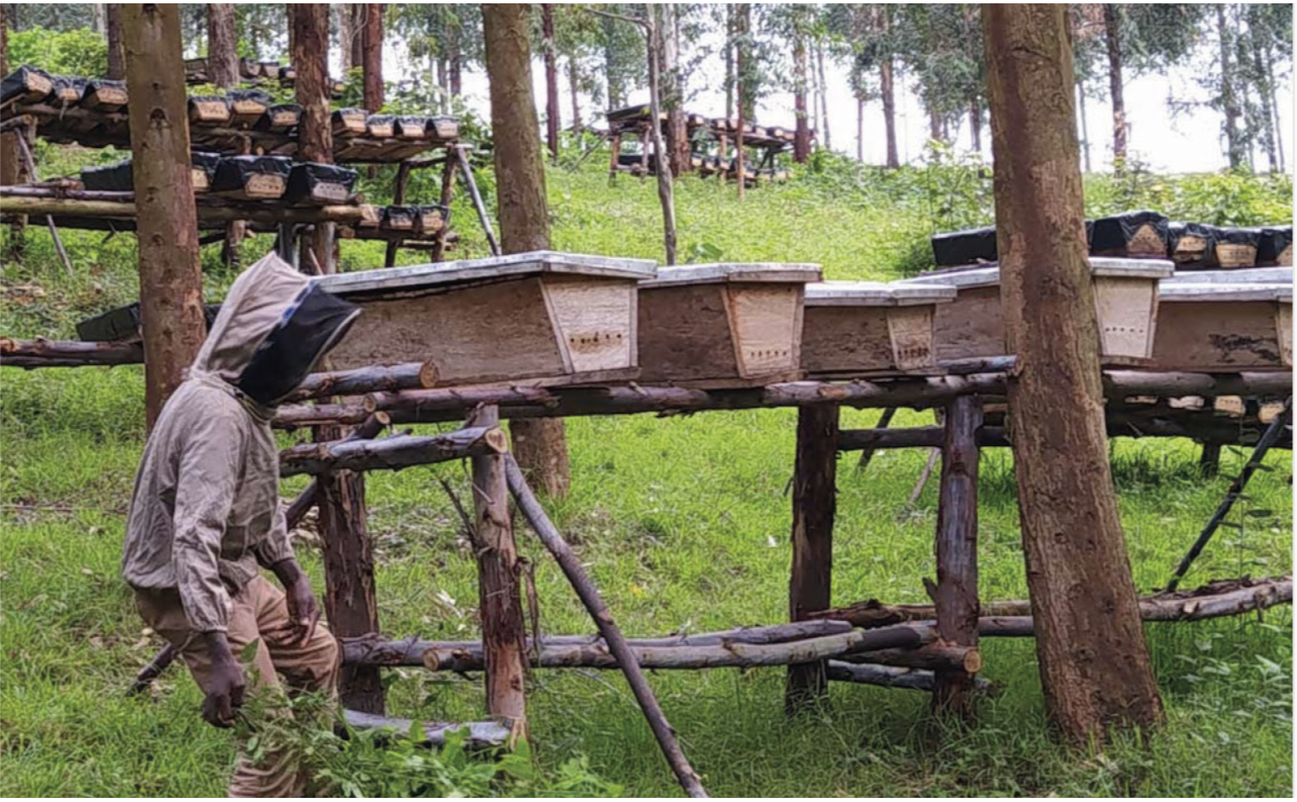
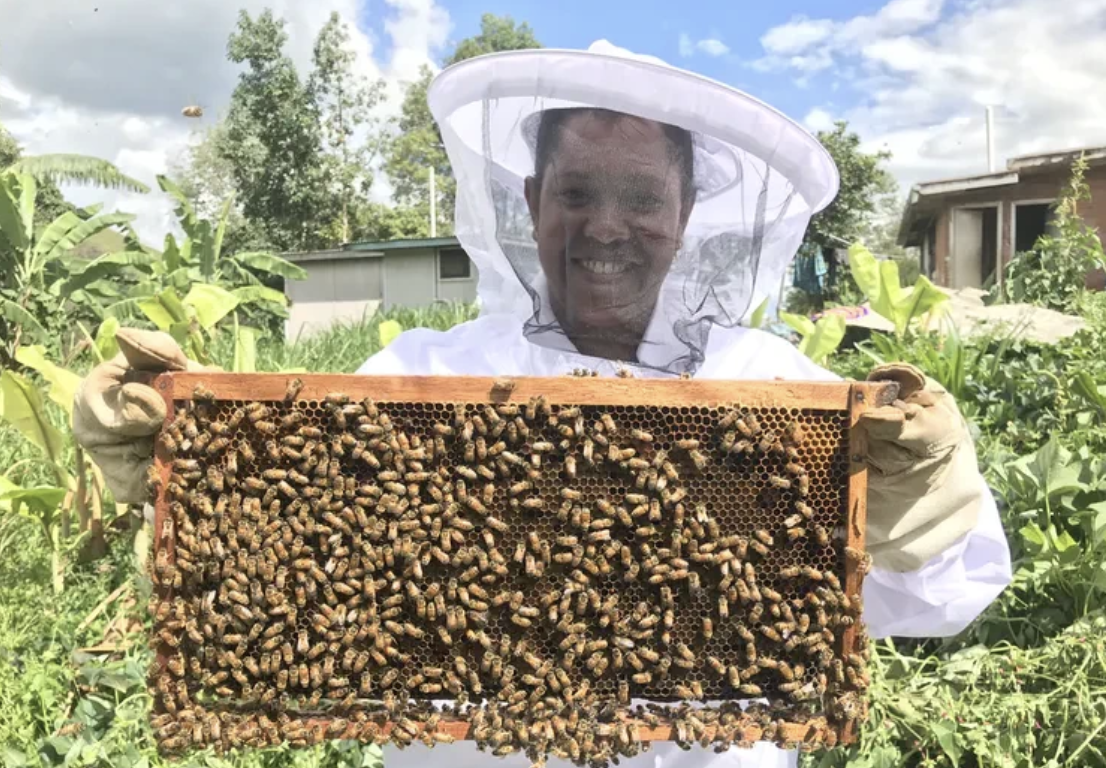
Bees for Development has helped some of the world’s poorest people become self-sufficient though beekeeping for over 30 years.
When we started work in 1993, beekeeping was considered a marginal activity and we struggled to get our point across. We knew the importance of bees in helping to make marginal livelihoods more resilient and successful. Yet not everyone shared our vision!
Things have changed. Today, the importance of bees for global food security is widely appreciated. Since we started, many development organisations have embraced beekeeping as a tool for poverty alleviation. Yet despite this, there is no other organisation like Bees for Development! Here’s what sets us apart…
First, we are a specialist beekeeping organisation with a specific purpose. All of our work is aimed at promoting beekeeping to change people’s lives for the better while supporting ecosystem integrity.
Beekeeping is not just one of our areas of expertise – it is what we all do, all day, every day. Most of us are beekeepers, we talk to beekeepers, we implement beekeeping projects; we read the research, follow global developments and question, puzzle and think about what really works, for whom and why.
We have learned for example, that simple, low-cost and local styles of beekeeping work best in many of the places where we work. We are probably the only international beekeeping organisation which often promotes local-style, fixed-comb hive beekeeping above frame hive systems, for example. Why? Because the former is accessible to the poorest people, whilst the latter isn’t. You can read more about our stance on inappropriate frame hive projects here.
Another unique feature of Bees for Development is the way we keep to the principles of natural beekeeping. We recognise that for poor people, nature is wealth. In beekeeping this means using the natural behaviour and immune responses of bees to keep them healthy. More intensive beekeeping, while appearing to yield greater honey harvests, is risky – and when things go wrong, they can go very wrong. High-input, capital intensive beekeeping systems do not make poor people less poor.
Above all, we recognise that beekeepers in difficult environments need to be empowered with access to skills, knowledge, information and connections. Bees for Development started life as an organisation delivering information, and this aspect of our work remains at our core.
Our full range of information services can be accessed through our Resource Centre. Here you can find all the past issues of Bees for Development Journal and how to subscribe to future editions – free of charge to beekeepers in poor nations, and you can search our online library, access our manuals, guides and fact sheets. Users’ enquiries will be answered by our team of specialists. There is no other organisation in the world that will answer enquiries from beekeepers in Bangladesh, Barbados and Burundi all on the same day!
Our emphasis on building local capacity permeates every aspect of our work. We always work with local partner organisations and this partnership working is effective, lasting and impactful. We have worked with so many beekeeping associations and groups over the years it is impossible to mention them all. At present we are particularly proud to be working closely with our partners in Ethiopia, Ghana and Uganda.
Our staff have well over 60 years of accumulated work experience focused on the poorest nations. Our work areas include environmental issues, trade, research and technical aspects of apiculture, feasibility studies, training and extension work, market analysis, as well as project design, planning, implementation, management, and evaluation. Since Bees for Development was established, our day to day work has brought us into contact with countless stakeholders, projects and businesses, with working expegrience in more than 50 nations. We know a lot of stuff! You can find out about our Consulting Services here.
Bees for Development staff are all passionate about their work. We recognise the rich and powerful benefits of bees and beekeeping – income for poor families, pollination services, biodiversity conservation, an economic incentive for forest maintenance. It is an utterly compelling story – one that we are excited about and want everyone else to be excited about.
To find out more visit https://www.beesfordevelopment.org
CUBA
During 2008-09 the Trust has been actively supporting the research work being carried out in Cuba by the National Program for Natural and Traditional Medicine.
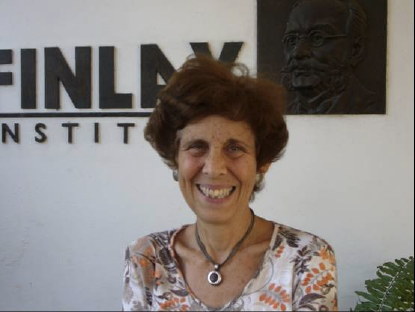
This has resulted from the contact with Dr Conchita Campa of the Finlay Institute in Havana following the International Bach Cromer Conference in September 2006.
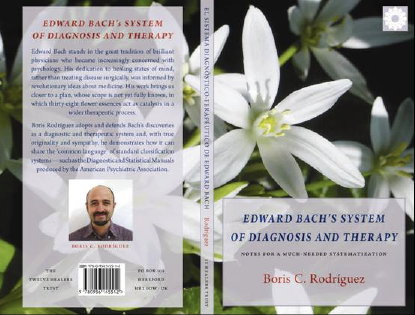
The Trust has commissioned the printing and publication of El Sistema Diagnóstico – Terapéeutico by Boris C. Rodriguez (System of Diagnosis and Therapy) in both Spanish and English. This has been circulated in Spain, Argentina, Chile and of course in Cuba.
It brings to greater prominence the work of Sr Rodriguez which is particular significant because of the link made between Bach flower therapy and models used by the American Psychiatric Association.
A further project in Cuba involves our support for a long term study of the benefits of using Bach flower therapy to help people suffering from high blood pressure. In this project it is proposed to carry out a clinical trial. Arterial hypertension patients will be studied, and aleatorization statistical methods will be employed to determine the total sample for this study. It has been decided to make a control group to compare the results.
Bach Floral Remedies will be the only medical therapy in use. A personalized characterization and transpersonal pattern diagnosis will be the clinical method to indicate proper flower treatment in every patient. The principal variable to measure will be systolic and diastolic arterial tension. Other cardiovascular parameters will be employed such as hemodynamic, electrocardiographic and echocardiography parameters. Clinical, physiologic and psychology evaluations of Bach Flower Essentials Therapy on diagnosed essential hypertension patients is the main purpose of the present study.
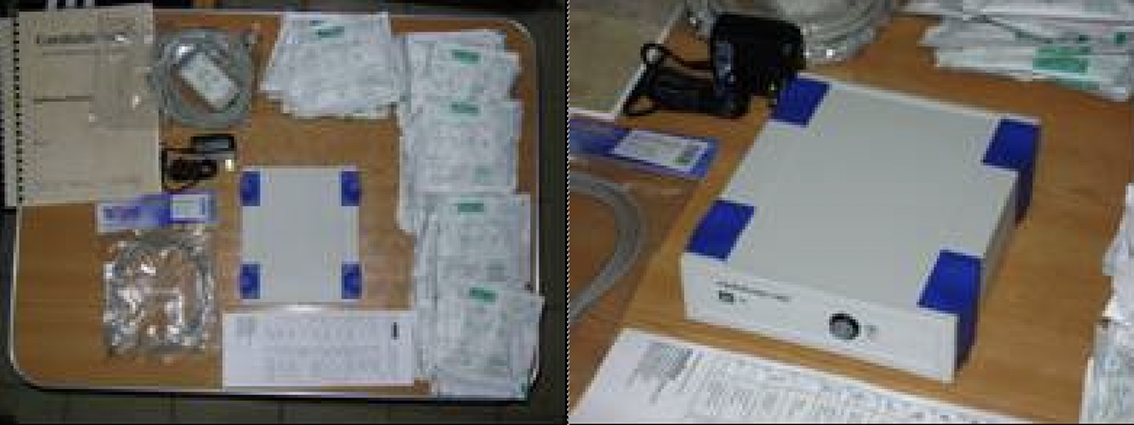
For the purposes of the study the Trust donated a portable heart monitoring machine with ancillary equipment. This was shipped to Cuba, in April 2009, with the kind cooperation of Cubana Airlines.
Dr Mainegra wrote from Cuba saying:
We have just brought home the box with all the things inside from the Finlay Institute. Here we are sending the photos. We have made some tests with the equipment, the software, the cables and one pair of electrodes, and everything is all right! The electrodes shapes are quite standard, just like those of regular use in critical patients to measure electrocardiography signals, so we think that we might get some from the Critical Care Unit where I worked before. We will manage; the most important thing is to have this monitor - small, easy-weighed, portable – to perform this study. Regarding the acknowledgement to The Twelve Healers Trust, it will be made properly by our Health Ministry.
Thanks again, for everything!

THE BETH BRUNO PROJECT
The Twelve Healers Trust supports the on-going work of the Beth Bruno Project in Brazil.
The Beth Bruno Project was established in January 2010 to train health carers in the region of Santarém-PA. The project encourages the development of individual potential, while providing an opportunity to acquire a professional qualification. The health carers will be encouraged to establish local clinics
within their communities, many of which are remote and without access to health care. These clinics will provide complementary therapeutic practices at a low cost, including herbal medicine, homoeopathy and bach flower remedies.
The project aims to stimulate the potential of every individual so that he or she can become an agent of change in their community.
ANGOLA
In July 2009 The 12 Healers Trust gave assistance to a Brazilian mission to help people in Angola learn more about Dr Bach and the flower essences.
Our part in this was to give financial assistance to the organisers (Instituto Trinitas) who needed to purchase books, photographic cards and teaching materials for the course.
In a letter to the Beth Bruno Project in Brazil this report gives a personal sense for what happened:
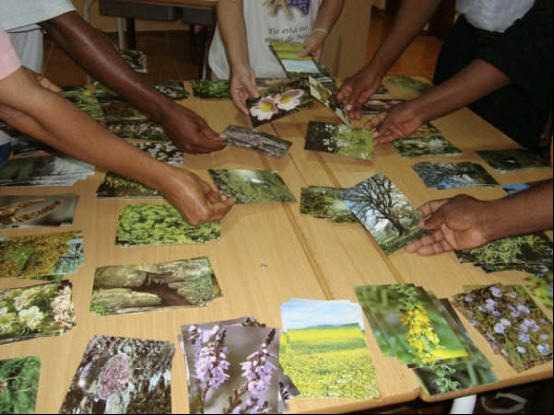
The first course took 6 days with 45 new agents, who have some notion of the work , but they are beginners. The second meeting was for an older group that has experience, there were 20 in this group and the course lasted for 8 days. Heavens, I never talked so much in my life and I never spent so much time with a group. In the second group we worked with the flower remedies for 3 days. I do not know for sure but I have the impression that it was the first course of flower remedies here in this land. We even did the circle dances. They were very impressed examining the flowers, and their wonderful observations were very powerful. Among the many things that moved them, is that they do not have the habit to observe flowers, had never thought that the plants were able to bring about very strong messages. They made great discoveries; we were very happy to be able to provide them this opportunity, so special. To me something was marked as if it was a tattoo... my life, the message of the flowers through the flower remedies. It is very important to these people marked by suffering and war for many years. There is much violence among them, a violence that is mixed with an enormous sensitivity. Among the group were some young people, who brought profound insights to the group seeing the gesture of the flowers, which I had never heard before. The only thing I could do before what I was seeing and hearing was to remain silent and contemplate. They promised to pass on to the others what they have learned. [This last is the important idea of ‘multipliers’ – sharing with others personal discoveries.]
Report of Bach Flower Remedies works in Angola
Angola is a country with 12,800,000 inhabitants. The capital city is Luanda and the language spoken is Portuguese. The country, rich in oil and diamonds, was devastated by a civil war that lasted 27 years and ended in 2002.
Most part of the population is poor and 80% of people have no access to doctors, hospitals or medications.
The Project:
On July, 2009, a 3-people1 team went to Angola with the purpose of training health agents and to strengthen the works within the natural area medicine, started in that country a few years ago.
Trainings on Popular Homeopathy, Bioenergetics, Phytotherapy and Bach Flower Remedies were given to Edna Fernandes do Amaral, Sister Marialva O. da Costa and Sister Rosa Antonia Pereira.These women are involved with popular movements and complementary medicine in northern Brazil.
The Audience:
The agents who participated in the training work in public health care centers, or in Pastoral Health Care Association (linked to the Catholic Church, which does work focused on social health and welfare). Some of them are familiar with Phytotherapy and Homeopathy, but are little or no familiar at all with Bach Flower Remedies.
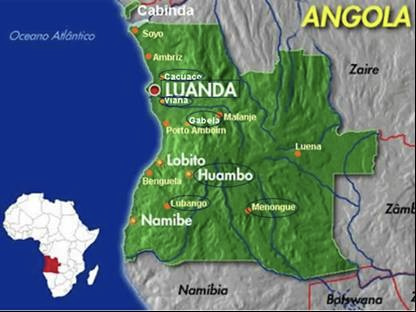
The participants of these courses came from the cities of GABELA, VIANA, HUAMBO, MENONGUE, CACUACO, LUBANGO and LUANDA.
The Bach Floral Remedies courses
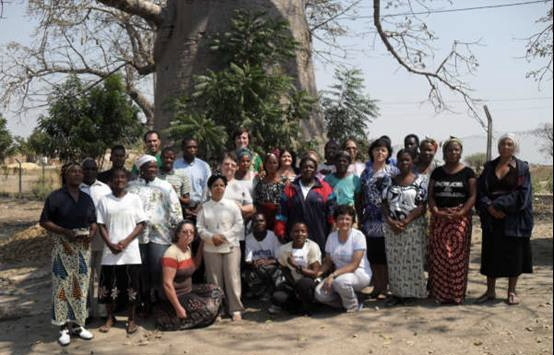
Between July and September, 2009, the remedies were presented in a superficial manner, to 44 health agents, in order to level the knowledge of all participants.
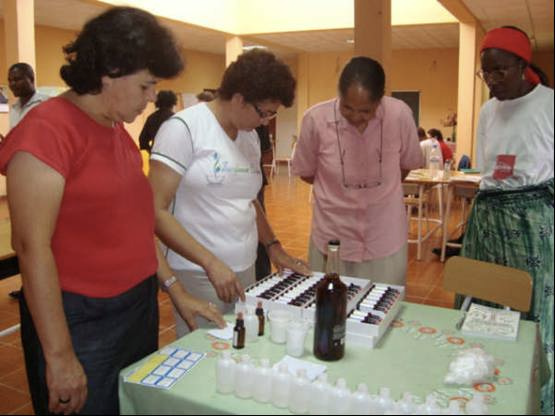
By the end of these meetings, each agent took a treatment bottle with flower essences chosen by the groups.
Luanda Class – July/2009
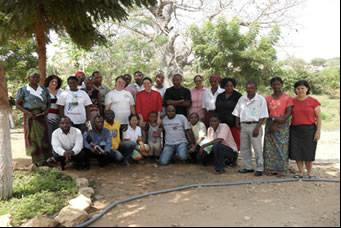
From this course, the agents committed themselves to organize study groups and schedule expansion courses in their provinces. In October, 2009, the expansion courses started being given in Luanda and shall expand to the country next year. Twenty five health agents have already been trained up to now and shall start the care soon.
Cacuaco Course – October/2009
The didactic materials used in this course were:
A simplified version of the course ‘Learning to Use Bach Flower Remedies – Healingherbs’.
The flower cards (postcards), used in the observations of plants movement (please refer to testimonies);
The book Heal Thyself, by Dr. Edward Bach.
The courses are aimed at the observation of the plant and of oneself, in a process that brings self knowledge and self development.
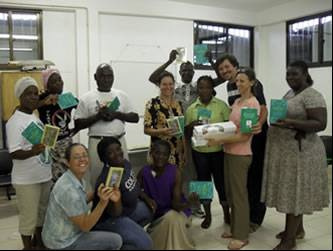
The Twelve Healers Trust collaborated with the donation of 20 “Heal Thyself” books, by Edward Bach and 20 postcards sets.
Testimonies:
“We learned to observe nature, pay attention to the smallest flowers that many times are unnoticed and which we don’t value. It is in these plants that, many times, we can also find solutions for many physical and psychic diseases.”
Paulina Lessa, Rosa Namona, Ir. Maurina
“With these studies we found out how distant we were from nature. From now on we will restart rescuing what we left because of our ignorance.”
Jacinto Filipe Luiz, Domingos José Saculembe, Domingas Noé Mariano
“I, Domingas, am, right now, having my treatment with flower remedies and feel as if I were a different person.”
Domingas Noé Mariano
Acknowledgement:
“I want to thank this affection you have for us, for our people who suffered with the war for so many years, and now the consequences are out there, making suffering continue. With flower remedies, this picture can be changed and bring peace, joy, serenity and Will of living for all those who make use of it. May God bless you for everything.”
Sister Neusa Pilati, ssps
BIG LEAF FOUNDATION
Our vision is of a community where displaced young people are valued, supported and given the ability to create better outcomes for themselves.
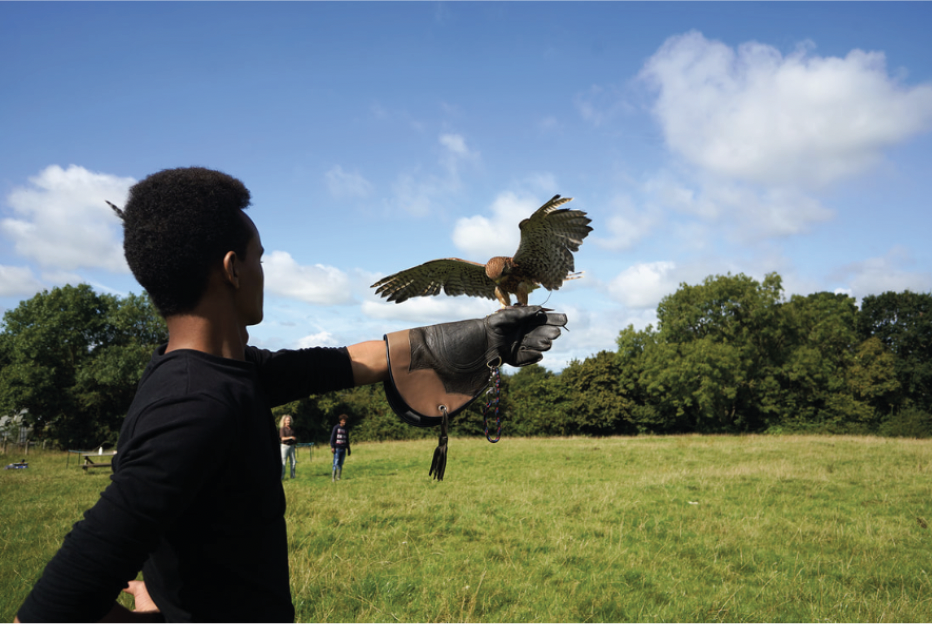
Our aim: to provide a nurturing program of activities, projects and events, that focus on combating social isolation for displaced young people in Surrey. We want the young people we work with to be excited about the opportunities available to them, and to value their unique talents and abilities so that they can rediscover their potential and move forward with renewed optimism. To find out more visit www.bigleafoundation.org.uk.